I used to focus mainly on sound quality and price when choosing headphones, but after wearing different models for extended periods, I realized that the way headphones fit is just as important. Living in Belgium, I often listen to music or podcasts while walking, and on weekends I might go running, cycling, or simply take a walk in the park. When headphones completely block my ears, I sometimes feel disconnected from my surroundings, and I naturally find myself lowering the volume when crossing the street.
That is why I have recently become more interested in open-ear headphones. Their biggest advantage is that they allow me to enjoy music while still maintaining a certain awareness of the sounds around me. Recently, I compared several Shokz headphones on i-Run, including the Shokz OpenFit 2, Shokz OpenDots ONE, and Shokz OpenMove. Although all three are designed around an open listening experience, their wearing styles and ideal use cases are actually quite different.
Shokz OpenFit 2: The Pair I Use Most Often
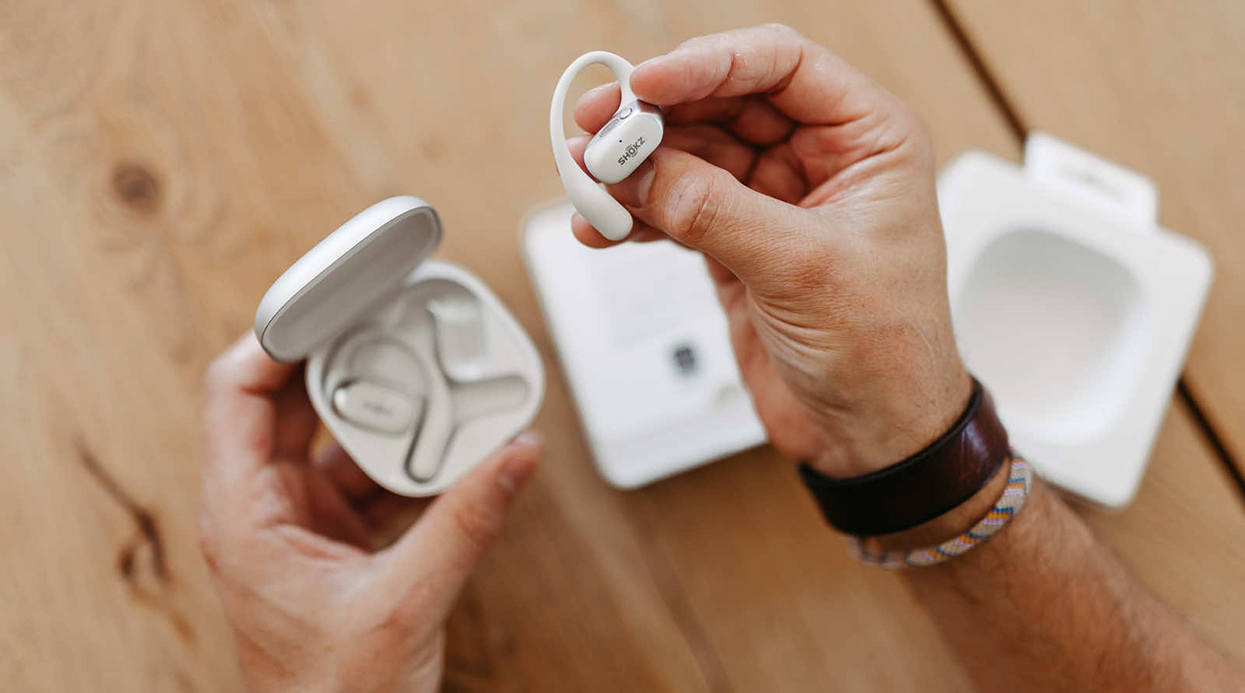
If I had to choose one of the three as my everyday pair, I would probably go for the Shokz OpenFit 2. It uses an open-ear hook-style design, so unlike traditional in-ear headphones, there is nothing inserted directly into my ear canal. Even after wearing them for several hours, I don’t experience the same sense of pressure that I sometimes get from conventional earbuds.
I also like wearing them while working at home. I can listen to music or podcasts while working on my computer without constantly taking the headphones off when someone wants to talk to me. What I find particularly convenient is that they don’t completely block out the surrounding environment. If someone speaks to me, I can usually hear them without having to pause what I’m listening to.
According to Shokz’s official specifications, the OpenFit 2 offers up to 11 hours of playback on a single charge and up to 48 hours with the charging case. It also features an IP55 rating and a four-microphone setup for calls. For me, these features are more meaningful in everyday use than simply looking at technical specifications. When I go running on the weekend, for example, I don’t have to worry too much about battery life, and the water and dust resistance also gives me more confidence when I’m exercising outdoors.
Shokz OpenDots ONE: Lightweight and Almost Like Wearing an Accessory
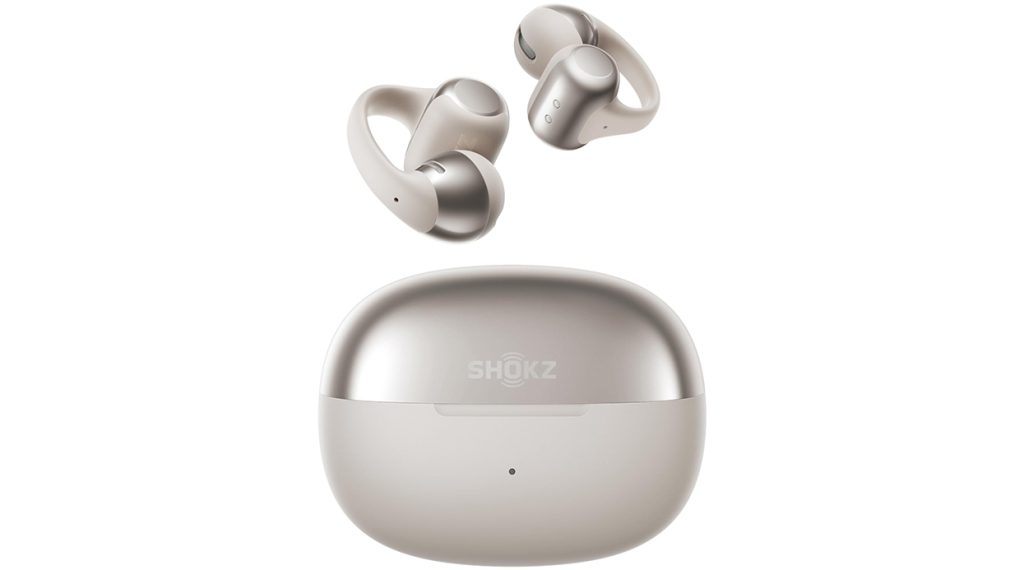
If the OpenFit 2 feels like an all-rounder, the Shokz OpenDots ONE immediately stood out to me because of its compact design. Instead of using a traditional ear-hook structure, it features a clip-style design that sits securely around the outer part of the ear.
I found this design particularly interesting because it doesn’t look quite like a conventional pair of sports headphones. When I’m wearing casual clothes or simply going shopping, the headphones don’t feel overly noticeable. Each earbud weighs around 6.5 grams, while Shokz states that they can provide up to 10 hours of music playback on a single charge and up to 40 hours with the charging case. The case also supports wireless charging.
One feature I particularly appreciate is the flexibility of the design. For someone like me who often picks up and puts down headphones throughout the day, the compact form makes them very easy to handle and carry around.
Of course, a clip-style design feels different from traditional in-ear earbuds. When I first tried them, I needed a little time to find the position that felt most comfortable for my ears. Once I got used to the fit, however, I found them particularly enjoyable for listening to podcasts for longer periods.
Whether I’m sitting in an office, having coffee, or walking around the city, I can listen to my own content while still remaining aware of what’s happening around me.
If you care a lot about compactness and wearing comfort, I think the OpenDots ONE is definitely worth checking out on i-Run. To me, it feels almost like a small tech accessory rather than a conventional pair of sports headphones.
Shokz OpenMove: A Good Option If You Prefer Bone Conduction
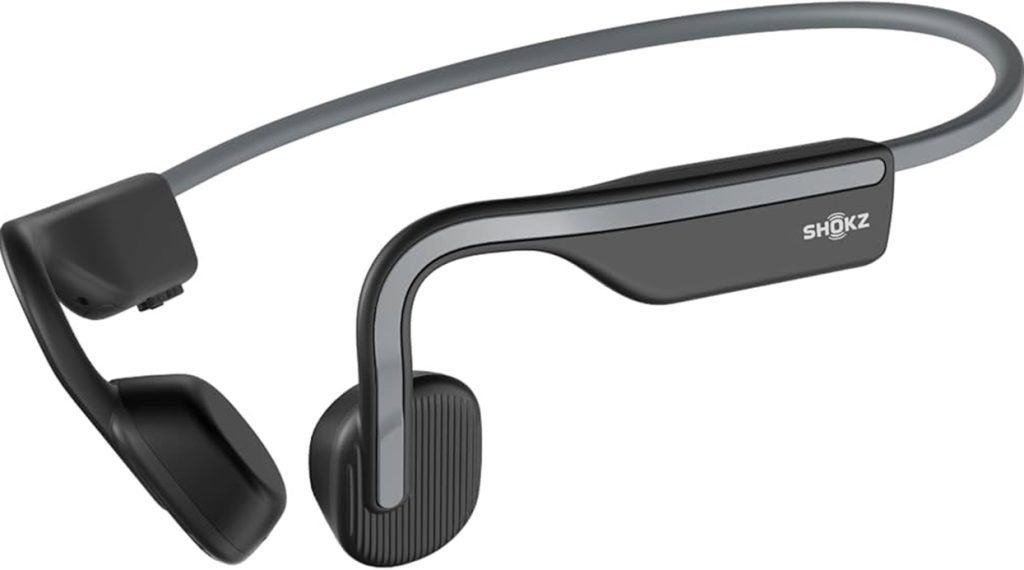
The third model is the Shokz OpenMove, which differs from the previous two mainly because it uses bone conduction technology. Instead of sending sound directly into the ear canal, it uses vibrations around the cheekbones to transmit sound, leaving the ears completely open.
When I first tried this type of design, the experience felt quite unusual. Music doesn’t feel as though it is being delivered directly into the ear in the same way as traditional headphones. Instead, it feels as if the sound is coming from around the area near my ears. After spending some time getting used to it, I found the design particularly suitable for outdoor activities.
When I go jogging in the park, for example, I want to remain aware of bicycles, cars, pedestrians, and other sounds around me. With the OpenMove, I don’t feel completely cut off from my surroundings, which I consider a major advantage when exercising outdoors.
The design also makes sense for sports. Compared with fully sealed in-ear earbuds, I don’t get the same enclosed or blocked feeling in my ears. For people who regularly run, cycle, or participate in outdoor activities, I think the OpenMove still has a very clear purpose.
If you have never used bone conduction headphones before, I wouldn’t recommend choosing one based solely on specifications. Your lifestyle and typical usage scenarios matter much more. If you mainly listen to music at home in a quiet environment, traditional headphones may be more suitable. But if you spend a lot of time outdoors, the open design of the OpenMove becomes much more appealing. This is also something I consider when comparing products on i-Run.
How I Would Choose Between the Three
After using and comparing these models, I don’t think there is one that is simply “the best.” It really depends on how you plan to use them.
If I needed one pair for working, commuting, walking, and exercising, I would choose the OpenFit 2. It feels secure when worn, offers plenty of battery life, and provides a well-rounded combination of features. Its IP55 rating and long battery life also make it practical for frequent everyday use.
If I cared more about compactness and the wearing style, I would choose the OpenDots ONE. Its clip-style design is distinctive, and the compact size makes it easy to carry in a small bag. Shokz states that it supports Bluetooth 5.4 and offers up to 10 hours of music playback on a single charge.
If I mainly wanted headphones for running, cycling, or other outdoor activities, I would consider the OpenMove. Its biggest advantage is the bone conduction design, which keeps the ear canals open and makes it easier for me to remain aware of surrounding sounds while exercising.
What I Look for in Headphones Has Changed
In the past, I would always start by asking whether a pair of headphones sounded good. Now, I first ask myself where I am actually going to use them. For me, even headphones with excellent sound quality can be disappointing if they become uncomfortable after only 30 minutes of wearing them.
That is also one reason I have enjoyed browsing headphones on i-Run recently. Comparing the Shokz OpenFit 2, Shokz OpenDots ONE, and Shokz OpenMove side by side makes it clear that open-ear headphones can follow very different design approaches.
The OpenFit 2 feels more like an all-purpose everyday pair, the OpenDots ONE focuses more on compactness and its clip-style design, while the OpenMove is particularly suited to people who prefer bone conduction and outdoor activities.
For me, choosing according to the situation is much more practical than simply following whichever model happens to be popular. Whenever I need a new pair of headphones, I still like to open i-Run, compare the different Shokz models and their features, and then decide based on how I plan to use them.